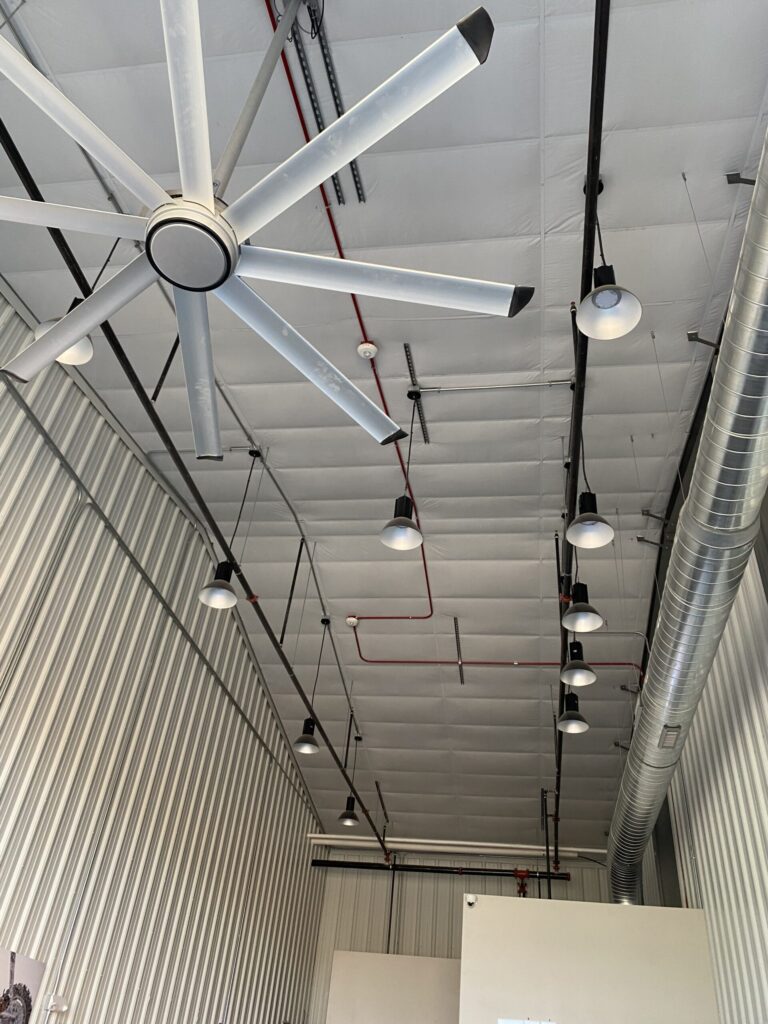
Ceiling Fan Installation in Wellington, CO

The Benefits of Ceiling Fans
Professional Electrician

Fans Mounted Solid, Wired Right, and Balanced to Run Quiet, Serving Northern Colorado and Cheyenne, Wyoming

A ceiling fan looks like a simple thing to hang, and the marketing on the box tends to agree. Then you’re standing on a ladder holding a motor over your head, staring at a ceiling box that may or may not be built to carry it, trying to sort out which wire does what. This is one of those jobs that goes smoothly when someone who’s done it a hundred times handles it, and turns into a weekend of frustration when it’s a first try.

At Daniels Electric we install and replace ceiling fans in homes across Wellington, the wider Northern Colorado area, and Cheyenne, Wyoming. Swapping out an old fan, putting one where a light fixture used to be, or wiring a spot that’s never had anything overhead, we handle the whole thing and leave you with a fan that runs quiet and stays put.

The Part Most People Miss: The Box

Here’s what trips up a lot of DIY installs. The electrical box in your ceiling has to be rated to hold a fan. A standard box made for a light fixture is built to carry a few pounds of stationary weight. A fan is heavier, and more to the point, it moves. All day, for years, it’s putting a spinning load on that mounting point. Hang a fan off a box that wasn’t made for it and you’re trusting a couple of drywall screws to hold a moving object over your family’s heads.

So the first thing we check is whether your box is fan-rated. If it isn’t, we install one that is, typically a heavy-duty brace box anchored to the framing so it can take the weight and the motion. It’s not glamorous work and you’ll never see it once the fan is up, but it’s the difference between a fan that’s safe and one that’s a slow-motion problem.
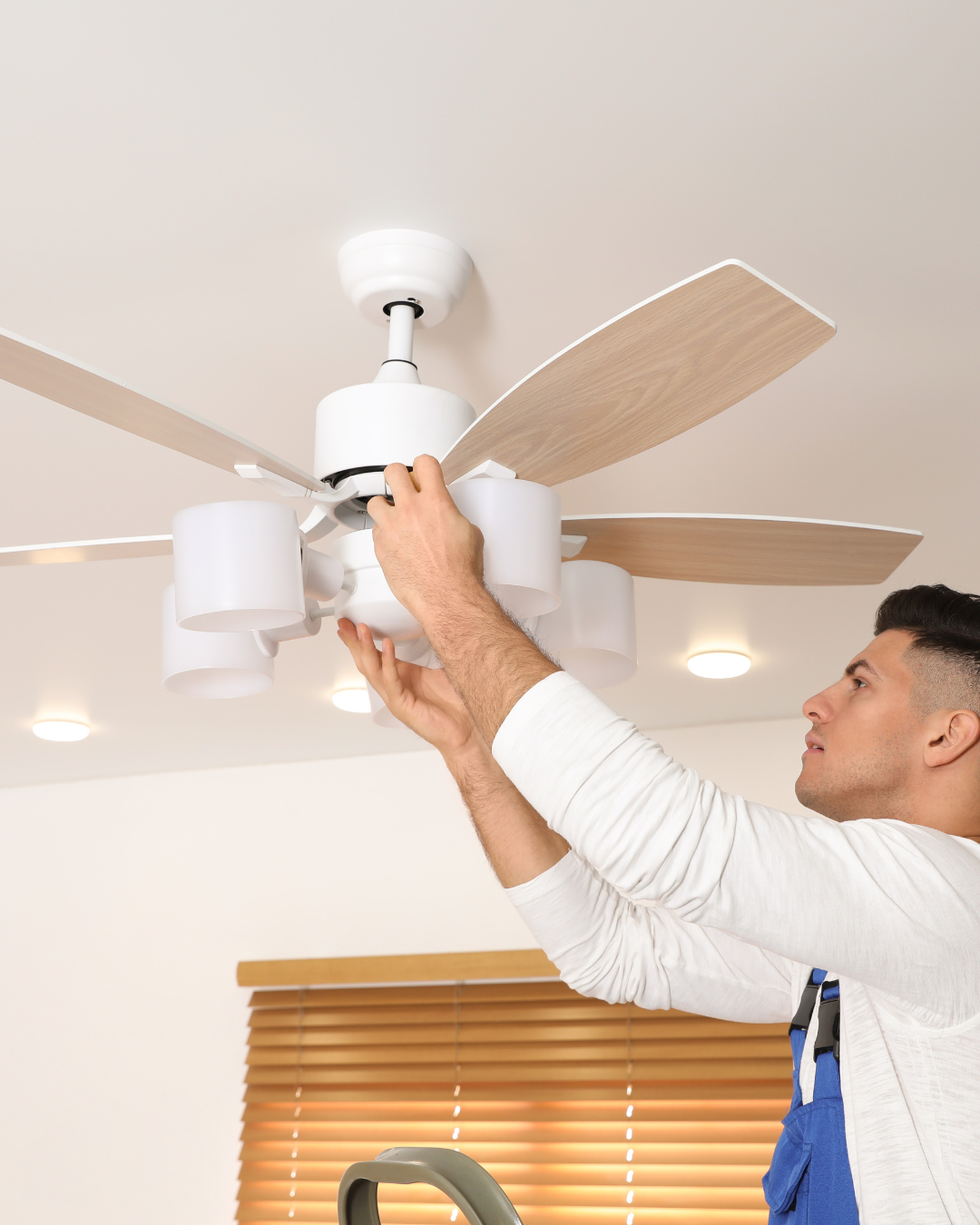
Ceiling Fan Replacement Colorado
Home Wiring Expertise

Replacing a Fan Versus Starting From Scratch

Not every fan job is the same size, and the honest answer to “how long will this take” depends on what’s already there.

If you’re replacing an existing fan or putting one where a ceiling light already hangs, the wiring and a rated box are usually in place, and it’s a relatively quick job. We take the old unit down, confirm the mount is solid, and get the new one up and running.

Putting a fan somewhere that’s never had a fixture is a bigger job. That means running new wiring to the spot, cutting in a properly braced box, and setting up the switch. Depending on the ceiling, the attic access, and how far the power has to come from, that can take a good chunk of a day. We’ll tell you which situation you’re in and what it involves before we start, so there are no surprises on the timeline or the cost.

Wiring, Switches, and Controls

How you want to run the fan matters, and it’s worth thinking through before install. A lot of people want the fan and the light on separate switches so they can run one without the other. Some want a wall control that handles speed. Others prefer a remote, or a smart control they can tie into the rest of the house. Each of those is a different wiring setup behind the wall, and it’s far easier to do it right the first time than to open things back up later. We’ll walk through the options and wire it the way you actually want to use it.

Balancing and the Details That Keep It Quiet

A fan that’s mounted and wired still isn’t finished. A wobbling fan is usually not a defective fan, it’s an install that skipped the last steps. We assemble the downrod and housing correctly for your ceiling height, mount the motor securely, attach the blades, and then test it across speeds to check for wobble and balance it out. A properly hung fan should run smooth and quiet, not rattle the light kit or shimmy on high.

Home Electrical System
Ceiling height and room size factor in too. A great room with tall ceilings needs a longer downrod and often a larger fan to actually move air, while a standard bedroom is a different calculation. And if you’re putting a fan on a covered porch or anywhere it’ll see moisture, it needs to be a damp- or wet-rated unit made for that exposure. We’ll flag it if the fan you picked isn’t right for the spot.

Why Homeowners Have Us Do It

This is everyday work for us, which is exactly why it goes quickly and cleanly. Our electricians are licensed and insured, they know how to secure a fan to framing the right way, and they handle the switching and controls without guesswork. You get a fan that’s safe overhead, wired how you want it, and running the way it’s supposed to, without spending your Saturday deciphering an instruction sheet.

FAQs

Usually yes. If the existing box is fan-rated we can often swap directly. If it’s a standard light box, we replace it with a braced box built to carry a fan before mounting.
Yes. That’s a new install, which means running wiring to the location, adding a properly braced box, and setting up the switch. It takes longer than a swap, and we’ll give you a clear estimate first.
Wobble usually comes from an unbalanced blade set or a mount that isn’t fully secure, not a broken fan. We can rebalance it and check the mounting, or take care of it as part of a replacement.
Yes. We handle dual switches, wall speed controls, remotes, and smart controls. It’s easiest to decide before install so we can wire it correctly the first time.
We do, as long as the fan is rated for the location. Covered porches need a damp-rated fan and exposed areas need a wet-rated one. We’ll let you know if the model you have suits the spot.

Call Daniels Electric to Get Your Fan Installed Right

Whether you’re replacing a tired old fan or adding one to a room that’s always needed better airflow, it’s worth having it mounted and wired by someone who does it right. Call Daniels Electric at (970) 690-4238 and we’ll get your fan up, balanced, and running the way it should.

Scroll to Top